

03 June 2026
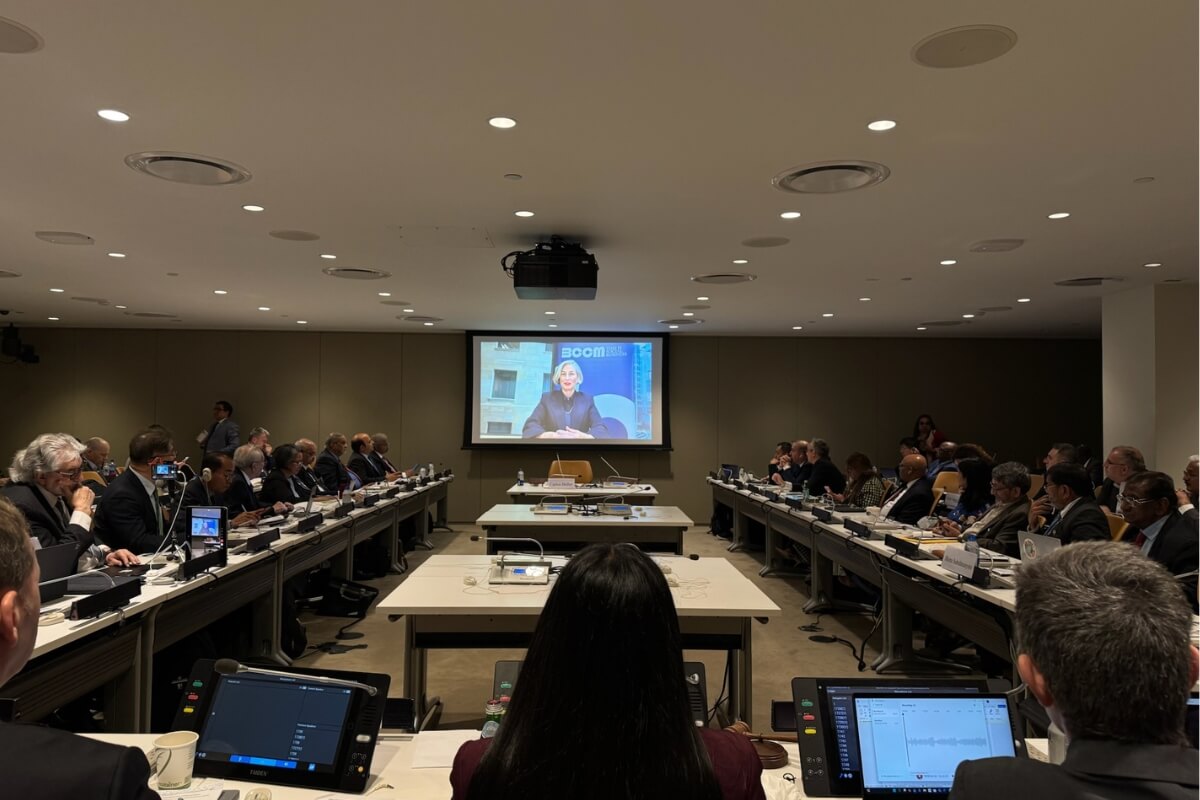
The Business Council of Co‑operatives and Mutuals (BCCM) has contributed to global discussions on inclusive finance at the United Nations Headquarters in New York, with Chief Executive Officer Melina Morrison and Senior Policy Adviser Linda Seaborn participating in the International Symposium on Cooperative Financial Institutions.
Convened by the International Cooperative Banking Association in collaboration with the International Cooperative Alliance and the United Nations Department of Economic and Social Affairs, the symposium brought together global leaders to examine the role of co‑operative financial institutions in building inclusive and equitable economies.

Protecting co‑operative identity in global financial systems
Melina Morrison gave a remote address on the role of regulation in enabling co‑operative financial institutions to grow while remaining true to their purpose.
Her remarks highlighted the importance of co‑operative identity as a defining feature of the model, requiring deliberate protection through fit‑for‑purpose policy and regulation.
“Co‑operative financial institutions are a foundational part of building inclusive and resilient economies that work in the interests of more citizens,” Melina said.
She emphasised that co‑operatives operate differently from investor‑owned firms, with governance, capital and purpose all structured around member benefit rather than shareholder return.
Melina pointed to Australia’s experience, where legislative reforms have created new capital‑raising pathways for co‑operatives and mutuals without compromising member ownership. These reforms demonstrate how policy can enable growth while preserving co‑operative principles.
Her contribution also reinforced the critical role of apex organisations such as BCCM in representing the sector and ensuring co‑operative models are understood in policy development.

Intercooperation in practice
Linda Seaborn joined the discussions in-person and contributed to discussions on intercooperation and access to finance, providing practical insights from the Australian context.
“In Australia, inter co‑operation is not abstract. It is the practical mechanism that makes cooperative enterprise viable, financeable and resilient,” Linda told the roundtable.
She highlighted the role of co‑operative financial institutions in expanding access to finance, particularly for working people and regional communities. In Australia, co‑operative banks were originally established to provide access to home loans for those excluded from investor‑owned banking systems, strengthening long‑term financial resilience.
Linda also pointed to emerging collaboration between co‑operative banks and the co‑operative housing sector to develop new models for financing affordable housing, demonstrating how intercooperation can respond to contemporary challenges.
Supporting underserved communities
A key theme of the symposium was the role of co‑operative finance in supporting underserved sectors and communities.
Linda noted that in regional and rural Australia, co‑operative financial institutions can be the last provider of banking services, highlighting their importance in sustaining local economies.
Without access to finance, farmers, small businesses and young entrepreneurs face significant barriers to growth. Co‑operative models help address these gaps while maintaining a long‑term focus on community benefit.
She also highlighted the need for regulatory settings that enable co‑operative banks to remain competitive and sustainable while continuing to serve their members.

Australian leadership on a global stage
Australia’s co‑operative and mutual sector is a significant part of the economy, with eight in ten Australians members of a co‑operative or mutual and more than five million people served by co‑operative financial institutions.
BCCM’s participation in the symposium reinforces the sector’s contribution to global policy discussions and highlights the relevance of Australian experience in shaping more inclusive financial systems.
Looking ahead
Discussions at the United Nations highlighted a growing international focus on building financial systems that are inclusive, resilient and community‑focused.
Across jurisdictions, co‑operative financial institutions face a common challenge: how to scale and remain competitive while preserving their member‑owned identity.
As Melina noted, the opportunity is not only to protect co‑operative identity, but to embed it more deeply in the future of financial systems.
Through continued collaboration and policy engagement, co‑operatives and mutuals are well positioned to contribute to more equitable economic outcomes globally.
Latest news

New research explores the future of community wealth building in Australia

Co-operative housing activation: Building a new housing pathway in Australia