

14 October 2016
The world’s largest 300 co-operatives and mutuals have grown their turnover by 7.20% to USD $2.53tn (2,533.1bn), according to the 2016 edition of the World Co-operative Monitor (WCM). The findings were presented at the International Summit of Cooperatives in Québec.
Three Australian co-operatives and BCCM members are again listed in the monitor: CBH Group (147), Murray Goulburn (188) and HCF (230).
The Monitor refers to data from 2014, which was collected from various sources, such as national rankings, sector rankings, existing databases containing financial data, annual reports and questionnaires. The database for this edition contains information on 2,370 co-operatives from 63 countries. Of these, 1420 co-operatives from across 52 countries have a turnover of over USD $100m.
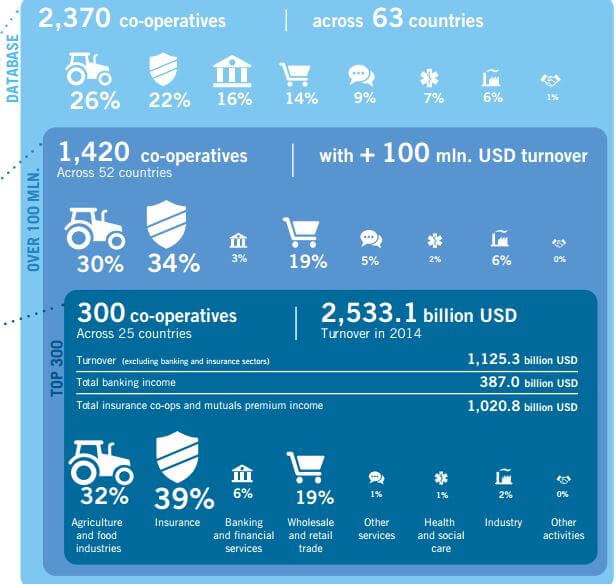
Charles Gould, Director General of the International Co-operative Alliance: “There is a grown interest for co-operatives worldwide, and we need to respond to this interest with adequate promotion of our model. The World Co-operative Monitor as the leading data source on the world’s largest co-operatives and mutuals is a central instrument for awareness raising, policy-making, advocacy and research.”
The largest co-operative by turnover was Crédit Agricole (USD $90.21bn), a network of co-operative banks from France.
Latest news
New APRA and ASIC expectations strengthen support for proportionate regulation

New research explores the future of community wealth building in Australia