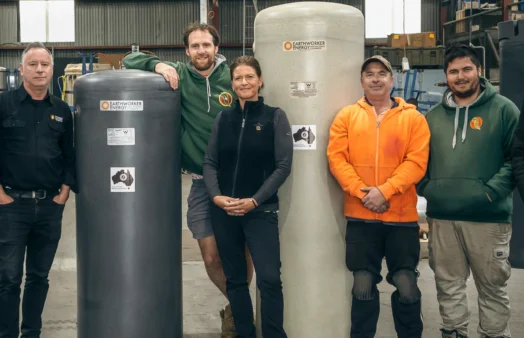

As part of The Bunya Fund Community of Practice, I had the opportunity to interview Travis Reid, Manager of the Boyup Brook Co-operative Company Ltd in WA. Travis joined us to share how he “grew up” with his co-op – from school holiday casual sweeping floors on creaky timber boards to leading a major local employer and community anchor. Our conversation explored the co-op’s trading rebate model, its deep roots in the town, and their new Bunya-backed project to co-design Boyup Brook’s future with the whole community. What follows is a case-study style reflection on that conversation, drawing out some of the key lessons and practical tips Travis offered for other Bunyans and co-operatives on a similar journey.
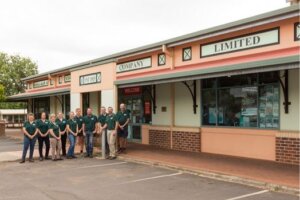
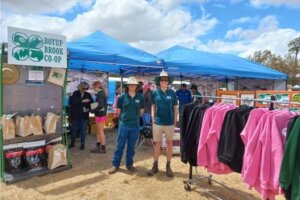
When Travis Reid talks about Boyup Brook Co-op, he doesn’t sound like a CEO delivering a polished pitch. He sounds like someone who has simply never left the room – or the town – long enough to forget what the co-op means to local people.
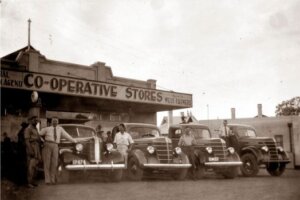
He started there as a teenager, working school holidays in what he describes as “a romantic shop… an old store, wooden floors, creaky floors”. Years later, after a detour to Perth and a few other jobs, he came back, joined the co-op properly, and worked his way through hardware, rural merchandise and, eventually, into the manager’s role.
Today, Boyup Brook Co-operative Company Ltd is a regional powerhouse disguised as a local store. In a shire of around 1,800 people, it has over 600 members, 17 staff and 8 board members. Over the past 22 years it has returned $6,511,657 to shareholding members through its trading rebate, distributed $87,679 since 2023 via a Community Fund, and sponsored $30,866 of local activity in 2022/23 and over $36,000 in 2023/24.
For Bunya Fund participants and anyone interested in co-operative development, Boyup Brook Co-op offers a grounded, practical case study in how to make a co-op matter – economically, socially and culturally – in a small town.
Growing with the co-op
Travis’ story is a reminder that co-operative leadership often emerges from within, not from outside.
He didn’t arrive with a management degree or a “change the world” job title. He arrived with a broom, curiosity, and a love of hardware. Over time he took on more responsibility – first leading the hardware section, then rural merchandise, and, when a vacancy arose, stepping up to manage the overall business.
Crucially, his attachment to the co-op grew alongside his understanding of co-operatives. Early on, it was just a job that paid the bills. Only later did he realise what it meant to run a business whose surplus flowed back into local households, clubs and services.
That journey matters. It means the person at the top has an instinctive feel for how the co-op works at every level: customer service, stock, credit, staff morale, sponsorship and community expectations. It also reflects a deeply co-operative approach to leadership development – growing people with the enterprise, not just slotting them into it.
A town that sees itself in the co-op
Boyup Brook is an agricultural district, but the co-op is no longer just a farmers’ buying group. Over time, the business has broadened its offer and, in doing so, broadened its membership base.
When Travis started, the co-op held around $200,000 worth of stock. Today it carries over $2.5 million, spanning agricultural lines, hardware, building supplies and homewares. That shift has made it relevant not only to broadacre farmers but also to “mums and dads that live in town”, local trades, newer residents and small enterprises.
Membership has grown accordingly. In earlier decades, membership was almost automatic if you were a farmer: if you needed supplies, you dealt with the co-op. Now, the breadth of stock and services means the co-op can credibly position itself as a “one stop shop” for the whole community.
But the membership strategy isn’t just about product mix. It’s about visibility and relationship. The co-op sponsors local sporting teams to the point of near saturation – uniforms, signage, events. Seventeen staff live, play and volunteer locally, so someone from the co-op is almost always present at community events. Kids grow up seeing the logo on jerseys, trophies and raffle banners long before they ever open an account.
As Travis puts it bluntly: without that membership base, “we’re nothing”.
The trading rebate: a simple, smart loyalty engine
At the heart of Boyup Brook Co-op’s business model is an elegantly simple trading rebate. It’s a piece of financial plumbing that quietly reinforces the co-operative proposition every year.
Here’s how it works:
- Surplus first, rebate second: Each year, the board reviews the co-op’s profitability (typically around August). If there is a surplus, they decide how much to return to members.
- Based on member trade, not just membership: The rebate is calculated on members’ purchases.
- Timed for impact: Rebates are issued in December, when local families are under pressure from Christmas and summer expenses. That makes the benefit immediate and emotionally resonant: the co-op isn’t just a cheaper place to shop; it’s putting money back into members’ pockets at the time they feel it most.
- Closed loop, local circulation: The kicker – the rebate can only be used at the co-op, either to pay down an account or to make new purchases. It’s not a generic gift voucher that disappears into a supermarket or online marketplace – it “stays with us”, as Travis says. That design choice keeps value circulating locally and reinforces the habit of trading with the co-op.
Alongside the trading rebate, the co-op has created a Community Fund initially using surplus COVID support money that the business didn’t actually need at the time. Rather than quietly absorbing it, they endowed a fund that has already distributed $87,679 to local projects – from clubs and schools to community initiatives.
From a development perspective, this is textbook co-operative design: simple, transparent mechanisms that align member benefit, business sustainability and community impact.
“The return is use”: saving the tyre shop
The phrase Travis used in our earlier conversations – “the return is use” – turns out to be a neat way of summarising what co-operatives actually do for communities.
For Boyup Brook, “use” has meant stepping in where a purely commercial operator might have walked away. A few years ago, the future of the local tyre shop was uncertain and there was a search for a buyer of the business.
The co-op board decided to purchase the tyre shop, install a manager and keep it running. They knew that if the service disappeared, people would have no choice but to drive to other towns – and while they were there, they’d spend money on other things too. Losing the tyre shop would mean losing much more than tyre sales.
Within a year, the rejuvenated business was performing well enough that the co-op could sell it on to the manager, keeping both the service and the ownership local.
The “return” in that story is not a cash rebate. It’s the continued existence of a critical service, the jobs attached to it, and the secondary spending that stays in town because people aren’t travelling away for essential purchases.
In Travis’ words, the co-op isn’t just a place to “come and buy stuff”; it’s providing services, jobs and sponsorship that together make the town more liveable and more economically resilient.
The Bunya Project: co-designing the town’s future
Boyup Brook is receiving critical support from The Bunya Fund, allowing the co-operative to access professional services needed for strategic planning. This co-op sector backed fund is generously supported by BCCM members Australian Unity, CBH Group (focus on WA grain-growing regions) and APS Benefits Group.
As part of this effort, support from WA grain co-operative, CBH Group has resulted in nearly $16,000 being allocated to Boyup Brook. This critical support is allowing the co-operative to access professional services needed for planning and development.
CBH Chief Stakeholder Relations, Sustainability & Strategy Officer Dave Paton reflected on the impact of co-ops on regional communities.
“The Boyup Brook Co-op is a great example of what’s possible when locals take the lead. Their commitment to returning value to the community, supporting local jobs, and backing grassroots initiatives sets a benchmark for renewal across regional WA."
Boyup Brook’s Bunya Fund project builds directly on their track record of local stewardship.
Inspired by a workshop with Peter Kenyon from the Bank of Ideas – which “blew [his] mind” by showing how small towns can re-energise themselves – Travis and the board decided to take a more deliberate role in shaping the future of Boyup Brook.
Through Bunya, they’re convening a community development and action planning process led by Kenyon. The idea is straightforward and deeply co-operative:
- Bring all the local organisations into the room – clubs, schools, service groups, businesses, agencies;
- Hold “town hall” style meetings where each can speak to what matters most to them;
- Actively include young people (including kids) and newer residents, whose perspectives are often overlooked; and
- Map the duplication of effort, underused assets and emerging needs (hopefully reducing what can sometimes be a heavy load for community leaders who often hold multiple roles).
Travis is clear that they don’t want to assume what the community needs. The discipline is in listening, not just deciding.
At the same time, he’s candid about the alignment with the co-op’s own business model. If the process identifies a clear need for more housing – and all signs suggest it will – that will, in turn, drive demand for building supplies, tanks and hardware. The co-op can help enable that development and gain mutual benefit from it, without compromising on its commitment to community-led planning. This all supports the town and the co-op members – a virtuous circle.
It’s a neat example of economic democracy in practice: a local enterprise using its assets, networks and convening power to support the long-term wellbeing of its community, while also securing its own future.
Top five tips for co-operative development – in Travis’ Words
- Grow leaders from the ground up: “At the start, it was sweeping floors and serving.”
- Put connection at the centre of your model: “I think it's all always about connection with your community.”
- Use rebates to reward loyalty and keep value local: “We provide a rebate every year based on sales. It can be used to pay your account at the co-op or buy something at the co-op. It's not a voucher to take somewhere else, so it stays with the co-op.”
- Remember that the “return is use” – services, jobs, sponsorship: “We are a business where people can come and buy the things they need, but we're providing services. We're providing jobs for locals and community sponsorships.”
- Co-design with your community – and don’t overcomplicate it: “Peter Kenyon is going to come down and do some meetings in a town hall style to get everyone there – all the local organisations. So, they can say their bit and say what's important for them. I think you can learn a lot from just having your eyes open really and getting a pleasurable experience. There's no need to complicate it.”
To conclude, Boyup Brook Co-op isn’t just a feel-good story – it’s a working template for how to embed a co-op in the everyday life of a community, and in doing so, keep the tyres turning for the long haul.
Along with APS Benefits and Australian Unity, CBH Group – a proud co-operative, owned and controlled by Western Australia grain-growing businesses – supports The Bunya Fund. By doing this, CBH Group backs community and economic development in grain-growing regions.
Keep reading more stories

Co-operative law, governance and compliance: Nuts and bolts with Katie Innes
Growing together: Ceilidh Meo on co-operatives, olives and the power of patient collaboration