
05 August 2025
by Kate Biondo, Co-operative Coordinator, CEO, Galactic Co-operative WA Ltd.
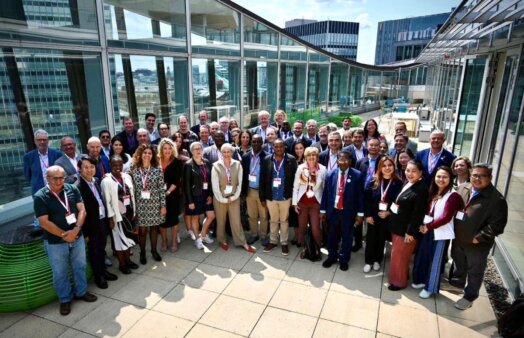
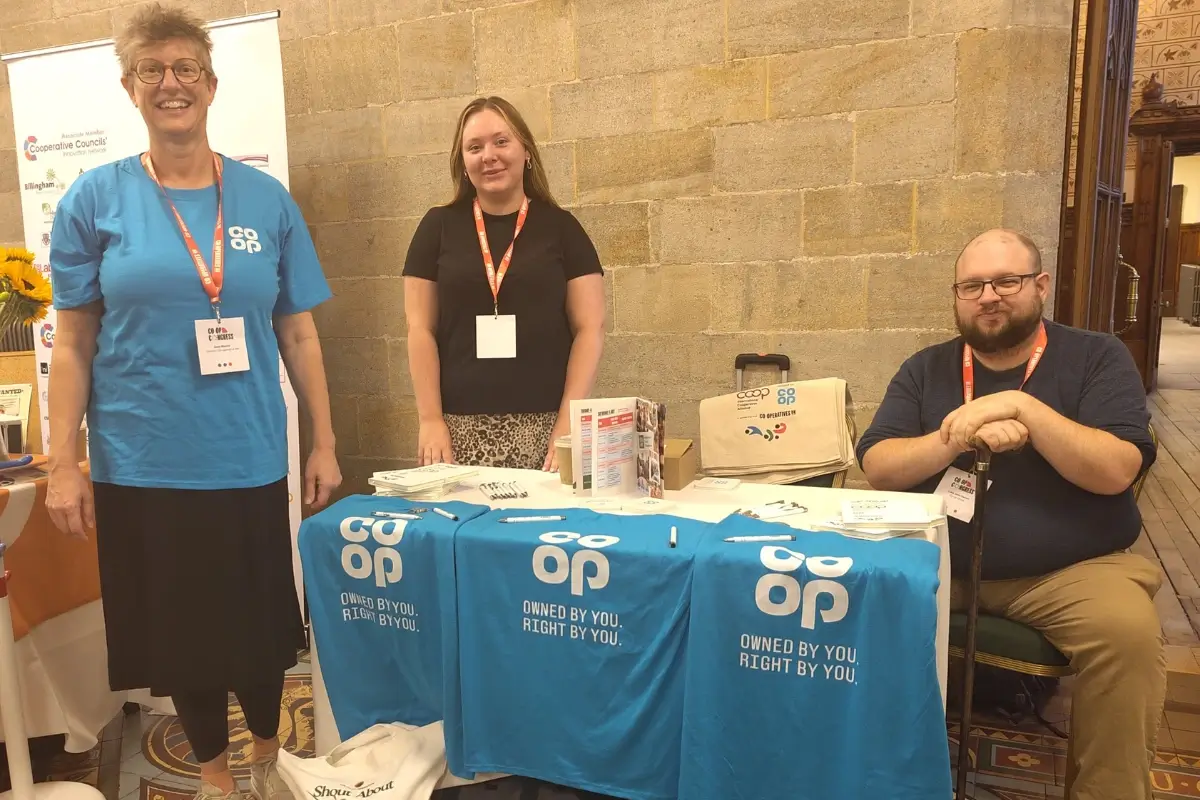
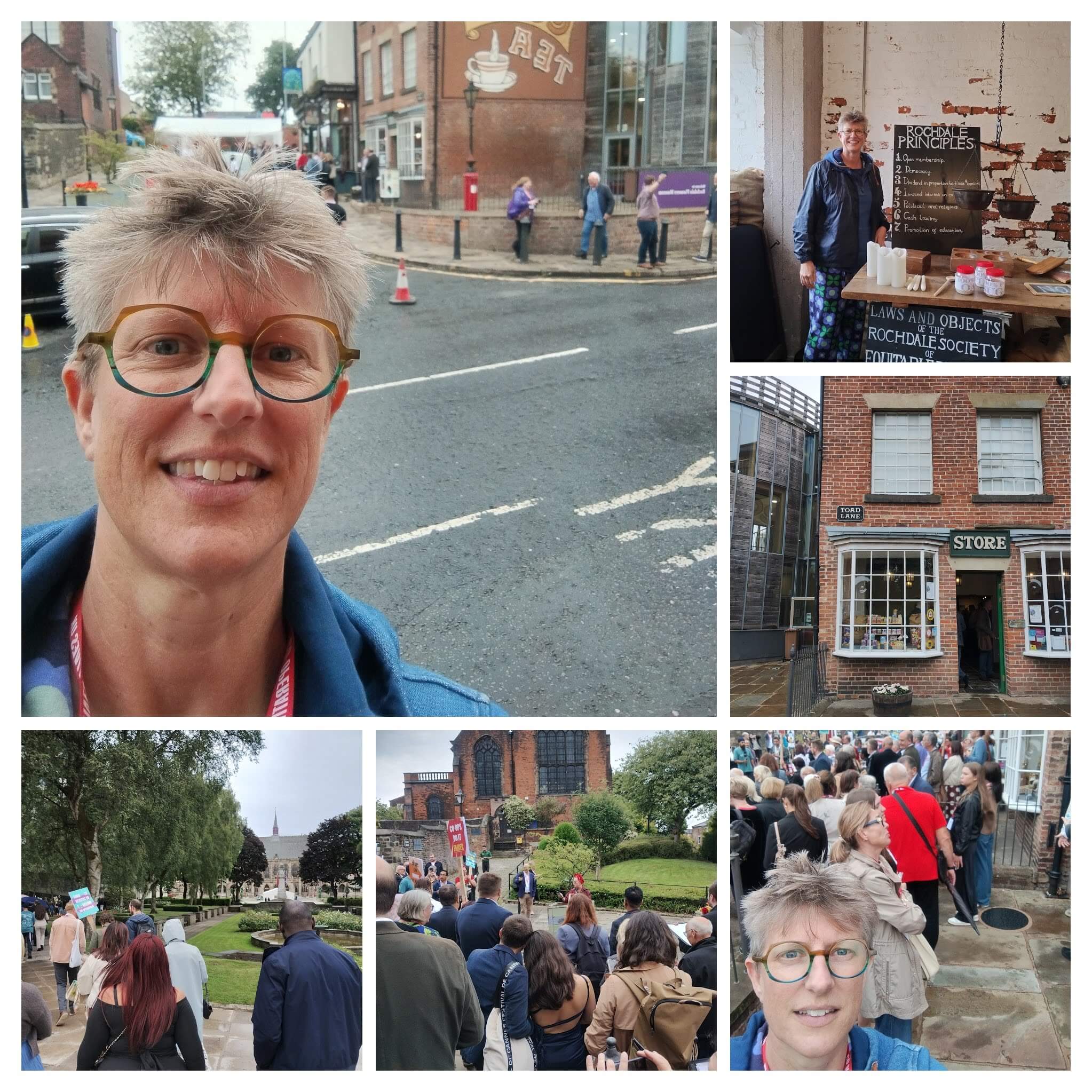
In July 2025, I had the honour of attending the Co-operatives Congress in Rochdale, UK, the birthplace of the modern co-operative movement. Held in the context of the United Nations’ International Year of Cooperatives, this gathering brought together co-operators from around the world to celebrate, question and chart the path ahead.
As a member of Galactic Co-operative, Western Australia’s only worker-owned co-op, I travelled to the UK with a purpose: to connect, listen and bring back practical insights to strengthen our movement here in Australia.
My attendance and hence this reflection was made possible through the support of a bursary from the Business Council of Co-operatives and Mutuals (BCCM), for which I am deeply grateful.
Alongside the Congress, I also spent time visiting two UK worker co-operatives: Birmingham Bike Foundry and Loaf Bakery & Cookery School, both of which are soon to be tenants in the ambitious Stirchley Co-operative Development, a multi-purpose co-op housing, arts and retail precinct that reflects a bold vision of community-owned infrastructure.
Key takeaways for Australian worker co-ops
While I gathered many insights, here are a few themes that stood out, especially for those of us building or managing worker-owned co-ops in Australia:
Membership isn’t just governance – It’s value
Neither Birmingham Bike Foundry nor Loaf Bakery charges a membership fee, which initially surprised me, given the emphasis we place on this at Galactic. But through our conversations, it became clear that membership value comes in many forms: contributions, distributions, culture and commitment.
At BBF, member Sean acknowledged that while they don’t charge fees, he understood the gravity of our approach in Australia. A significant buy-in can reinforce the seriousness of joining and highlight the importance of mutual commitment, particularly in small, democratic businesses.
At Loaf, the financial foundation was established through community shares, with some early investors still receiving a free loaf each week – a delicious, ongoing thank-you that keeps the community close.
Yet despite these differences, both Sean and Dave emphasised something critical: distributions matter. Bonuses and profit-sharing – even when modest – are a tangible reminder of the purpose and value of worker ownership.
But what’s vital is this:
The model for capitalising the co-operative and sharing in any financial success must be meaningful to both the member and the mission.
Whether through:
- Tiered or staged membership fees
- Share classes (e.g., community investors vs. worker-owners)
- Deferred contributions
- Profit-based buy-ins
- Loyalty-based distributions
…we need to keep exploring and expanding the tools available to co-ops in Australia.
Australia has a massive opportunity with the new Community Foundations, and to learn from the UK experience of Community Share Offers. Support from BCCM will be crucial to make this more accessible. The recent review of The BCCM Co-op Builder, Capital Builder and Community Investment in Co-ops Manual was completed with a UK community shares expert, looking at the way those offers are typically structured. It just isn’t well known in the community or supported by regulators.
There’s a huge opportunity here for BCCM and its members to advocate for:
- Regulatory clarity and support for community investment models
- Flexible co-operative structures that reflect the diversity of our economy
- Education campaigns on how co-ops can fund without compromising their values
Sustainability is as much economic as it is environmental
Loaf’s breadwinner (pun intended) is its cookery school, which funds the wages for its nine members and sustains the broader mission of ethical, locally sourced baking. The link between economic resilience and mission-driven work was clear: co-operatives must be financially stable to fulfil their purpose.
Radical roots, practical expression
Sean from BBF expressed more radical political leanings than we typically hear in the Australian co-op space. While some of that tone may not translate directly to Galactic’s current membership, it serves as a reminder that co-ops are inherently political, even when we focus on practical, day-to-day work.
The political tone was reinforced by hearing from Lucy Powell MP, Leader of the House of Commons, and Paul Waugh, Labour and Co-operative MP for Rochdale. Both spoke passionately about the role of the Co-operative Party in embedding co-operative principles into UK government policy – championing reforms like the Great British Energy Act, a Community Right to Buy, and the most significant modernisation of co-op law since the Victorian era.
In the UK, the co-op movement is deliberately political, ensuring its values are represented in Parliament through the joint Labour and Co-operative Party. It was a powerful reminder that if we want co-ops in Australia to thrive, we need to find our political voice – to advocate for policies that support worker ownership, community enterprise and democratic governance.
And this connects directly to substance. If we want our members to see themselves as co-owners, decision-makers and changemakers, we must provide more than a legal structure – we need education, agency and meaningful engagement.
Co-ops as shared space across ages
One of the most energising themes from the Congress – and especially from Rylie Sweeney’s keynote – was the call to make space for younger members, earlier, not as tokens or trainees, but as agenda-setters, co-designers and co-owners from the very beginning.
“We are temporary owners of the co-operative.” Rylie said. “What we build should outlast us.”
Involving young people is not just about succession planning; it’s about co-operative relevance and regeneration. Young members bring urgency, new priorities (such as climate, housing and digital rights), and ways of working that co-ops need to remain relevant.
Projects like Kitty’s Launderette showed what’s possible when the co-op model is shaped by younger members with a stake in their neighbourhoods. Their sense of ownership, creativity and trust in the model was inspiring.
In Australia, if we want worker-owned co-ops to thrive in the long term, we need to:
- Invite younger people into the process, not just the outcome
- Design onboarding that is inspiring, not overwhelming
- Offer financial models that meet them where they are (more on that below)
- Create room for culture, art, activism and collaboration – beyond business plans.
Bringing young people into this space isn’t a side project. It’s core to co-operative survival.
Co-ops as vehicles of change and hope
Steve Coogan gave one of the most moving reflections at the Congress. He spoke about the power of co-operatives to give people agency, not just over their work, but over their communities and futures. Co-operatives offer something rare to push against despair and distrust that is felt by many in the younger generations.
A model that says, “We trust you. We’ll do this together.”
As governments increasingly face the social fallout of inequality and disengagement, many are beginning to recognise that co-operatives deliver what policy alone cannot:
- Locally grounded jobs
- Ownership and belonging
- Resilience in our communities
Co-ops are becoming an essential part of the community. From social care to housing, and from the creative industries to renewable energy, not a fringe alternative, but a viable and scalable response to systemic challenges.
If we want to see this grow in Australia, we must build stronger bridges between:
- Policy makers and co-operative advocates
- Business incubators and worker-owned start-ups
- Local councils and community enterprise networks
The Co-op model belongs in the curriculum
Another urgent call from the Congress – and global co-op leaders like Jeroen Douglas and Rebecca Harvey – was the need for better education about the co-operative model.
We can’t expect growth in the sector if co-ops are still:
- Absent from university business courses
- Misunderstood by accountants, legal advisors and consultants
- Seen as “niche” by economic development agencies
To change this, we need to embed co-operatives into the core of mainstream business education. That means:
- Including co-operative governance and finance in accountancy and business development degrees
- Training co-op-literate business advisors
- Creating case studies and practical toolkits for accelerators and incubators
- Encouraging local councils and networks to procure from co-operatives and promote them as a first-choice business form
Co-operatives are ready to deliver on the significant challenges. But we must equip the ecosystem, especially our educators, funders and policymakers, to understand and support them.
What it means for Galactic
Returning to Australia, my most significant reflection is this:
Membership must mean something. It must feel different, deliver different and demand different.
Co-ops are not just another business model; they are a space for agency and shared wealth. Distributions are one part of that. But so too are education, storytelling and participation. If we want our movement to grow, we must offer that depth to every member. Not just a seat at the table, but a reason to sit there.
Shouting about our co-ops
One message that came through loud and clear in Rochdale: we need to shout about our co-operatives.
In the UK, the Co-operative Party ensures that co-operative values are not just kept within our movement – they are heard in Parliament, reflected in legislation, and championed in mainstream political discourse. Lucy Powell and Paul Waugh reminded us that this visibility is what has enabled major policy wins, from the Great British Energy Act to the upcoming modernisation of co-operative law.
In Australia, our movement is smaller and less politically visible – but no less vital. We need to make more noise:
- Telling our stories in business networks, councils and media.
- Educating advisors – accountants, lawyers, consultants – so they see co-ops as a viable, mainstream business form.
- Engaging policymakers so that co-operatives are included in strategies for housing, energy, jobs and community development.
If we want co-operatives to be a vehicle for hope and change, we must make them impossible to ignore.
Final thought
The UK co-op movement, like ours, is not without its challenges. But what I saw in Rochdale, Birmingham and beyond was a fierce, joyful commitment to co-operation.
Co-operation marks the beginning of more international exchanges. There is so much we can learn from each other, and even more we can build together.
Latest news
Co-operatives build a better world

Re-evaluating our purpose: Melina Morrison Addresses the AOA Seminar in Seoul, South Korea