

17 February 2026
BCCM CEO Melina Morrison joined ABC RN’s Life Matters to discuss competition in Australian retail, the role of member‑owned businesses and how co‑operatives can help restore diversity and fairness to local economies. Below is a cleaned and verified transcript of Melina’s remarks as broadcast.
The BCCM views this development as a significant opportunity for Australia to consider how similar policy settings could strengthen local ownership, improve competition and increase regional economic resilience.

Photo: BCCM CEO Melina Morrison speaking at the Go Vita member conference, Australia’s largest health food retail group.
One person who’s part of the alternative is Melina Morrison, CEO of the Business Council of Cooperatives and Mutuals. Melina, your organisation represents co-ops right across Australia. For those who don’t know what is a co-op?
We’ve heard some great examples this morning from your case study about how you can try to shop local. You can even sign up to subscription services. So I’m getting my olive oil delivered to my door, my toilet paper, my box of imperfect goods.
But if you really want to shop in a place that has different motivations than a shareholder company, you’ve got to look for independents, you’ve got to look for co‑ops. And these are the businesses that are motivated only to benefit you, the member, the consumer.
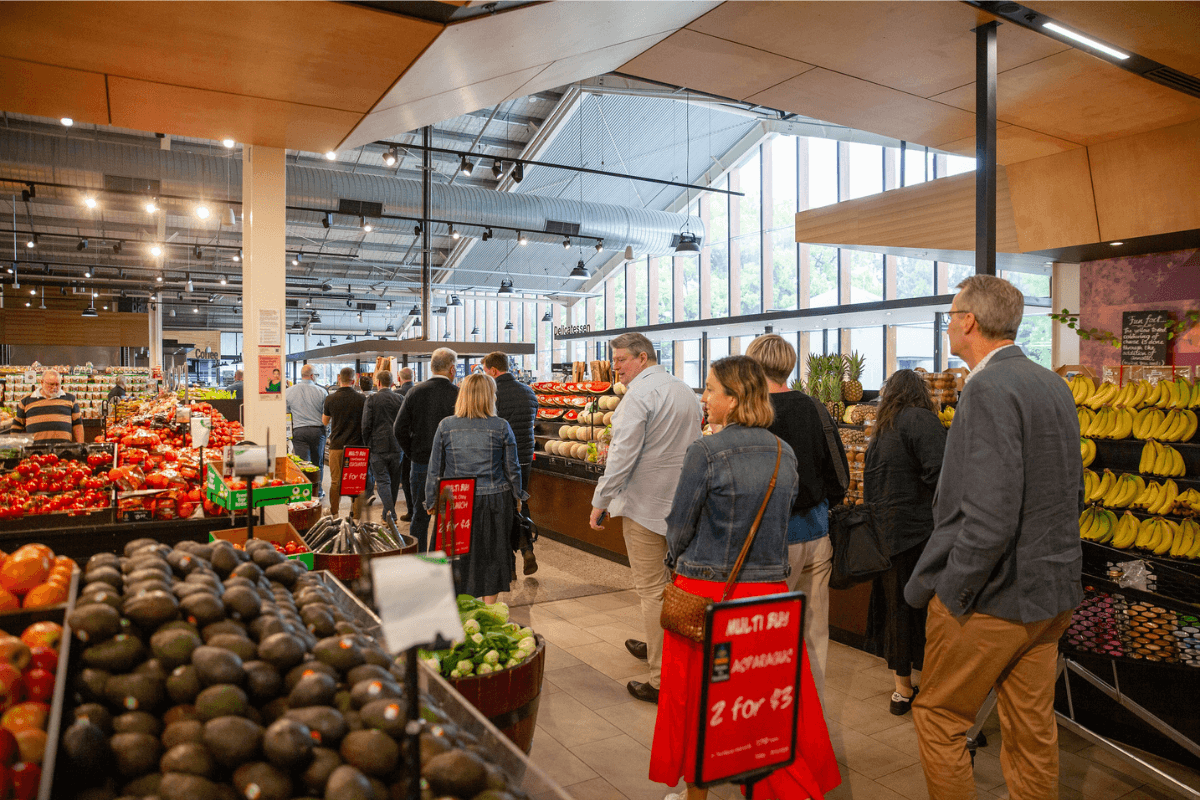
Photo: BCCM tour of The Barossa Co-op one of the largest and longest-standing retail customer co-ops in Australia. With over 20,000 members and significant local economic multiplier effect (for every dollar spent, an additional $0.76 is generated locally)
How do the prices compare? Because we heard Paul say earlier that there might be things that alternatives to supermarkets can offer beyond price.
Well, let’s just put one thing in front of us and remember that it’s one of the big two in the duopoly that is in front of the court for price gouging at the moment. So even when we think we’re getting bargains, they’re getting at our wallet in other ways. The motivation of the business is to make the customer the profit centre. In a co‑operative, the motivation is to make the customer the purpose.
So there are lots of different factors. Paul talked about scale. Certainly, that’s one of the factors. Co‑ops can scale. We have buying and purchasing groups in Australia that bring hundreds of thousands of small independent businesses together to get the economy of scale.
But where you meet them on the high street as an independent store, then you’re getting that local choice. It’s actually competition in an economy that brings down prices, and that competition has to be between business models as well as between businesses.
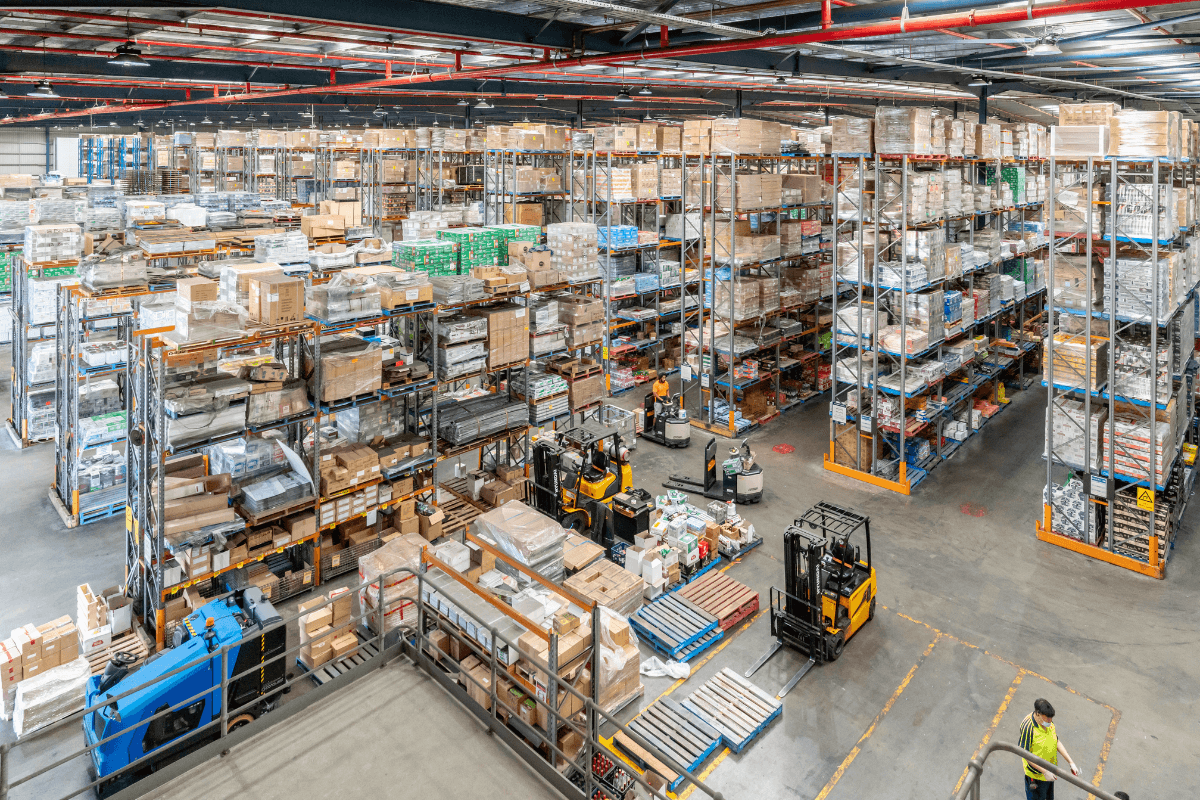
Photo: ILG, Australia’s largest liquor co‑op.
So, co‑ops used to be a lot more common in Australia. What’s changed?
Certainly, we used to have more co‑operatives in retail. There are still 130 locations across Australia where you can shop with a local co‑op, and that means you’re actually a member of it. So when you join up and get the discounts that membership avails you, you’re also helping to build the scale of the business, which will ultimately bring down the prices, because there are two things that co‑ops want to do: highest quality at lower prices.
They also look for the long‑term vision for the local economy because that’s where they’re based. So they’re really interested in the producers that provide the goods and the products to the store.
What happened, really, in the great sort of neoliberal time in our economy is we lost sight of the fact that different businesses have different motivations, and we thought that the shareholder company was the most efficient business model. What we’re finding now is that concentration in markets like retail is really diminishing the overall efficiency and productivity not only of the businesses themselves but of the overall economy itself.
So we need to diversify our economy. In places like Switzerland, 70 per cent of all retail is offered through co‑operative businesses. So you can have scale, but also local choice and genuine competition.
This is one reason why the UK Government has committed to double the size of the co‑operative economy, because it’s realising that a lot of its competition has been vacuumed out by concentration in ownership.
We need just two things from government, really. There’s a recommendation that the ACCC has made to try to incentivise more community‑owned stores, particularly in what they call food deserts or thin markets.
But we need a programme like the programme that we’re running for the Australian Government on care. And that’s a programme where smaller aged care residences are coming together to share their back office and services so they can get the economy of scale they need to keep their businesses viable, but they’re actually still able to be locally owned and be very responsive to their local neighbourhood.
We need a programme like that for retail co‑operatives because the main barrier for people forming co‑operatives as a way to do business together is education and awareness. Lawyers don’t know about them, accountants don’t know about them, banks don’t know how to fund them.
And then the other thing is we have to shut the back door that has allowed so many co‑operatively and community‑owned businesses in Australia to be taken over or corporatised. Basically the underlying assets of that co‑operative, which have been built up by members over many decades, are essentially distributed for a profit motive.
We made it too easy to let go of those wonderful co‑operatives. It’s not just at the retail end. It’s also all of those canneries, those food producers, the big brands.
Listen to the full segment: Can we really avoid the supermarket giants?
Latest news
Co-ops and Mutuals poised to build a more resilient economy for Tasmanians
Parliamentary Friends reception showcases the national importance of producer co‑operatives