

12 January 2026
Article by Richard Warner (CEO) Nundah Community Enterprises Co-operative (Nundah Co-op).
Work Integration Social Enterprise (WISE) is a relatively new but growing movement in Australia. In other countries, they are a key policy instrument for creation of employment for disadvantaged workers at scale.
I manage a WISE, which is also a Workers’ Cooperative, established by people with intellectual disability in the late 1990s. The WISE movement in Australia contains world-class social enterprises, achieving deep social impact; however, given their challenging operating environment – a highly competitive open market where they are required to cover a significant portion of impact costs (i.e. the support costs of engaging excluded workers) – they have struggled to scale at a pace that many within the movement would have hoped to have seen.
With the support of a Westpac Social Change Fellowship, the first place I chose to travel to was Italy, as it is well known for its strong cooperative movement – and particularly for the development of the social cooperative model in the early 1990s. This model led to the flourishing of participant-governed social services and work integration social enterprises, which now number more than 17,000 and employ half a million people.
I was fortunate to have the guidance of cooperative academic and consultant Dr Michele Bianchi, who took me on a tour of some incredible social cooperatives in Milan. We began our trip with an espresso at one of Milan’s first social cooperatives, Olinda, which transformed an old psychiatric institution into a work integration social enterprise for people with psychiatric disabilities. The change was astonishing. They have revitalised a public space – the former hospital grounds – and opened thriving hospitality businesses that create socially inclusive employment for people with psychiatric disabilities. Importantly, and unlike many social enterprise models, participants are encouraged to be involved in the governance of the organisation in which they are employed. It was deeply impressive.
All in all, I visited twenty social cooperatives in and around Milan, and all of them were doing deep work of social inclusion.
My overall impression of the Italian movement was that they have:
- Retained a culture of place-based practice, successfully embodying the principles of subsidiarity and participant ownership.
- Established robust mechanisms for movement building, which allowed small entities to scale whilst retaining their local identity.
- Advocated for policies, which create a viable market for work integrated social enterprise (i.e. the model seemed to work economically and to be growing).
This is gold, in my view, from a social policy perspective and an example of what many systems and place-based interventions in Australia are seeking to achieve.
To better understand the Italian social cooperative model – and what we in Australia might learn from it – I thought I would ask Michele a few questions about their design and growth.
Michele, please tell us a little bit about yourself, your background and interest in the cooperative movement? Also, the interest you are seeing internationally?
My name is Michele Bianchi, and I work as a consultant for ON Impresa Sociale, with a strong focus on community development. I come from an academic background as a researcher in the sociology of organisations, with a particular interest in the Third Sector (often referred to in the English-speaking world as the Social and Solidarity Economy), with a specific focus on community cooperatives and social enterprises. This academic path allowed me to understand cooperation not only as an economic model, but also as a form of active citizenship – a way of structuring social relations, valuing people and promoting democratic participation.
My interest in the cooperative movement comes from the conviction that enterprises are not only profit-oriented: they are business models capable of generating long-lasting social value, fostering inclusion and responding to collective needs. Working with ON Impresa Sociale gives me the opportunity to translate this theoretical perspective into concrete development work, participatory design processes and strategic consultancy.
From an international perspective, I see growing interest in the Italian cooperative model. Italy has a long-standing and deeply rooted cooperative history, and social cooperatives, in particular, play a historically fundamental role in our economic system. Many countries look to the Italian experience as an example of how the social economy can be integrated into welfare policies – how cooperatives can operate not only at a local scale but also at a systemic level, without losing their identity. Practitioners, policymakers and researchers abroad are increasingly interested in how Italian social cooperatives manage to combine economic sustainability with social mission, and in the participatory governance structures that make them resilient.
Please tell us a little about the history of social cooperatives in Italy. What is their origin, and what forms do they take?
In Italy, social cooperatives emerged in the 1970s as a concrete response to deep social changes. Transformations in family structures, rising welfare needs and strong political activism played a significant role. These represented the latest evolution of a cooperative movement whose roots go back to the mid-19th century. Social cooperatives developed in a context where public resources were not yet adequate to fully address new needs around inclusion and care.
Several historical processes contributed to their emergence: the closure of psychiatric institutions following Franco Basaglia’s reforms in the 1970s, which raised the issue of social inclusion for people with disabilities; the growing problem of drug addiction; and the increasing need for extra-familial care for long-term patients. The political and civic dynamism of the time, along with the search for new forms of grassroots activism, encouraged groups of citizens, associations and volunteers to organise themselves to tackle these emerging issues.
This civic energy came together with another key element: the cooperative model, inherently flexible, enables people to pool scarce resources – not only capital but also skills, social energy and relationships – to generate social innovation. Social cooperatives became an ideal vehicle: not just businesses, but organisations creating value for the community, driven not only by profit but by mission.
Their legal recognition came with Law No. 381 of 1991, which formally defined two types of social cooperatives:
- Type A: Delivering social, health and educational services.
- Type B: Aimed at the work integration of disadvantaged people.
It is worth noting that nearly 20 years passed between the first grassroots experiments and the law itself – demonstrating that this was a bottom-up phenomenon, not something imposed from above.
Social Cooperatives in Italy are ‘Multi-Stakeholder’. Please tell us what this means and what it looks like in terms of governance?
From the outset, Italian social cooperatives have not been based on a single, homogeneous idea of “membership”. They are not made up exclusively of workers, nor only of service users; instead, they include a plurality of stakeholders. This multistakeholdership has become one of the pillars of the Italian social cooperative model.
This governance structure allows social cooperatives to include service users, workers (both regular and “disadvantaged” workers), volunteers, public authorities and local communities within the same decision-making environment. This means that decisions are taken not only by those employed in the enterprise, but also by those who benefit from its services and those who contribute to its social mission – each with a voice and a role. Although more complex, this model has important advantages: greater legitimacy, a diversity of perspectives and a structure that encourages social innovation.
The Italian experience shows that, despite the “decision-making costs” (more stakeholders mean more negotiation, more assemblies and more time needed to reach shared decisions), the model is sustainable and, in many cases, highly effective. Cooperatives are able to design internal rules that combine democratic participation with economic management – defining statutes, governance bodies and responsibilities that reflect member diversity. Clearly, to ensure efficient operations, decision-making often gives priority to managerial effectiveness; nonetheless, the cooperative model still offers spaces for discussion, collective growth and shared responsibility whenever members and stakeholders choose to pursue these paths.
This approach is not purely theoretical. It takes concrete shape in the way social cooperatives work within the welfare system: thanks to their governance, they are able to engage in meaningful dialogue with public institutions, participating in co-programming and co-design processes for policies and services. They are not passive service providers, but active contributors to the construction of local welfare systems.
The concept of subsidiarity—the principle that decisions should be made at the level closest to those they affect—seems very important to the design and culture of the Italian social economy. Can you please tell us more about this?
A key element of the Italian welfare system is the principle of horizontal subsidiarity (set out in Article 118 of the Italian Constitution). The idea that local communities and organised citizens should be enabled to take care of their own needs and the common good, and that public authorities should intervene in support of – not in substitution for – these forms of self-organisation. At the same time, it is important to ensure that this principle is not used politically as an excuse for local authorities to avoid their responsibilities. Public institutions must still intervene wherever citizens and the social economy cannot adequately address social issues.
In practice, within the Italian welfare context, horizontal subsidiarity translates into two fundamental mechanisms:
- Co-programming – Public institutions involve social economy organisations, cooperatives and other stakeholders (such as schools and health institutions) from the very beginning of the needs assessment process. Local authorities do not decide alone: they engage with those who live and understand the territory on a daily basis.
- Co-design – In recent years, supported by various regulatory developments, co-design has become increasingly common. Once needs are identified, responses are designed collaboratively: cooperatives, associations, citizens and public institutions work together to plan services and interventions.
This combination – historical, cultural and operational – makes Italian social cooperatives far more than simple enterprises: they are living systems of democratic participation, community resource activation and social innovation. From a cooperative perspective, this multistakeholder and subsidiarity-based structure represents the capacity to build resilient, inclusive and sustainable local economies while remaining faithful to a mission of collective wellbeing.
Social cooperatives are a meaningful actor in the Italian economy. How many are there, how many people do they employ, and is the sector growing?
Considering the data published in 2024 by EURICSE (European Research Institute on Cooperative and Social Enterprise), based on the AIDA database, Italy currently has 17,630 social cooperatives. The total turnover of the Italian social cooperative sector amounts to €17.8 billion, which is €5.4 billion more than ten years earlier. According to ISTAT, the workforce employed in social cooperatives stands at around 491,000 people.
The sector grows by approximately 12,000 – 13,000 workers each year, corresponding to an annual increase of 2 per cent – 3 per cent, which highlights a steady and linear growth trajectory.
Do Type B social cooperatives receive external funding for the disadvantaged workers they support? And what taxation or other benefits help make them sustainable?
Regarding Type B social cooperatives – those specifically focused on the work integration of disadvantaged people – several support mechanisms exist:
- They can receive regional or national subsidies for employing disadvantaged members.
- They benefit from reductions in regional turnover taxes and national profit taxes (also considering that distributing profits to members is prohibited, and all surpluses must be reinvested in the cooperative).
- They are exempt from paying social security contributions for disadvantaged worker-members.
- They have access to subsidised revolving funds specifically designed to support the development of social cooperatives.
Despite these tools, I must be honest: I remain skeptical about the narrative that Type B social cooperatives are always “thriving” or free from difficulties. Running a cooperative enterprise whose core is a social mission (the inclusion of disadvantaged individuals into work) means facing a double challenge: on one side, the demanding nature of social work; on the other, the pressure to ensure the sustainability of a real business. In Italy, bureaucracy is often heavy, taxation is not always favourable, and balancing social mission with the need for continuous revenue generation is far from simple. This makes the cooperative entrepreneurial pathway a complex journey, certainly not an easy one.
There seems to be a strong solidarity economy in Italy. Can you please tell us more about this and its importance?
Many cooperatives – including social cooperatives – join consortia. These consortia provide a wide range of support:
- Administrative and accounting services.
- Project design (especially for grants and competitive funding).
- Communication activities.
- Policy advocacy.
Thanks to these consortia, smaller cooperatives can benefit from economies of scale and access expertise that would otherwise be difficult to obtain independently.
Regarding mutualistic revolving funds, these represent a fundamental mechanism for the long-term sustainability of the cooperative movement. Mutual funds are managed by the major cooperative federations (such as Legacoop, Confcooperative, and AGCI), established under Law No. 59 of 1992.
For example:
- Coopfond (linked to Legacoop) is financed by a mandatory contribution equal to 3 per cent of the annual profits of member cooperatives, as well as the residual assets of cooperatives in liquidation.
- Similar funds include Fondosviluppo (linked to Confcooperative) and General Fond (linked to AGCI).
These funds support the creation of new cooperatives, finance innovation projects, increase employment (including in disadvantaged regions) and strengthen the cooperative structure as a whole. The “revolving” nature means that cooperatives can receive loans or temporary equity investments from the fund and then return the resources once projects become self-sustaining, ensuring long-term viability.
For me, this system of mutual funds is one of the most powerful expressions of systemic solidarity within the cooperative movement. It is not only about supporting individual cooperatives, but about reinforcing the entire cooperative ecosystem – ensuring that the cooperative model continues to grow and innovate. Thanks to these tools, the Italian cooperative movement has a stable financial foundation to back new social projects, involve younger cooperative entrepreneurs and address structural challenges, without relying solely on external public funding.
– End of Interview –
Ways forward
There are several ways we could incorporate learning from Italy to support the growth of the WISE movement in Australia. It seems to me key ones are as follows:
– Support the expansion of participant and multistakeholder governed models.
There is deepened social impact and longevity when local people, including people from the margins having a real say in the direction of the organisation they work for. Sadly, across the for purpose sector, this tradition seems to be in decline. However, the good news is that it’s possible to incorporate participatory governance into any model. Cooperatives are of course set up for this and have a deep tradition of practice to draw from, but whatever legal form we may choose, the culture and practice of shared decision making will be at least, if not more, important than the legal model we adopt.
– Development of more partnerships and consortia between social enterprises to achieve scale.
Italy appeared to have established patterns and practices of developing partnerships between social enterprises which allowed them to scale whilst retain local identity and ownership. Again, the values, relationships and culture behind this practice is as important as the mechanism adopted, but they have demonstrated it works. It would be fantastic to see more of this kind of activity in Australia, which might help some smaller Social Enterprises become more sustainable as well as take on larger contracts and receive a fair share of the economic benefits of those contracts.
– Establishment of movement building funds
The final learning for me is that whilst government and philanthropy are clearly critical ongoing funders our movement, we could also generate our own funds for the strengthening and expanding of our work. In Italy this is achieved through levying small but consistent contributions from enterprises based on their level of trade which form a revolving fund. It could create an additional source of untied funding for supporting movement building and innovation. Our peak bodies could play an important role in this, and it might be something government and philanthropy could also get behind.
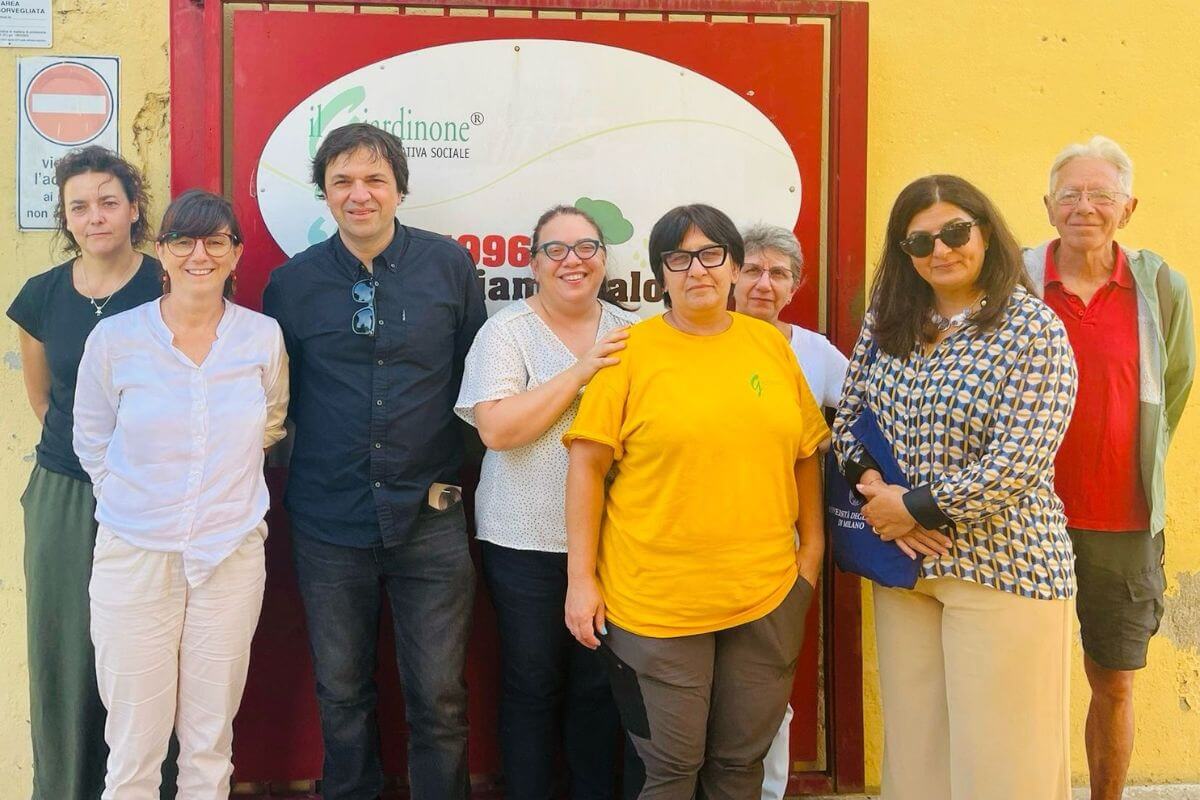
A big thank you to Business Council of Co-operatives and Mutuals (BCCM), who assisted me in making linkages with the Italian Cooperative Sector, and of course the Westpac Scholars Trust, who funded my trip. Thanks also to Michele for these insightful responses and a guided tour around some of Milan’s best Social Enterprises and Social Cooperatives. Finally, I must give a shout out to the amazing team from Confer cooperative who took me on a three-day tour of Milanese and Brescian Social Cooperatives.
Now to look at how we can translate some of the learning from Italy to our context within Australia. If you are interested in furthering the dialogue, please contact me at enquiries@ncec.com.au.
Latest news

Co-ops and Mutuals poised to build a more resilient economy for Tasmanians

Parliamentary Friends reception showcases the national importance of producer co‑operatives