
Social care
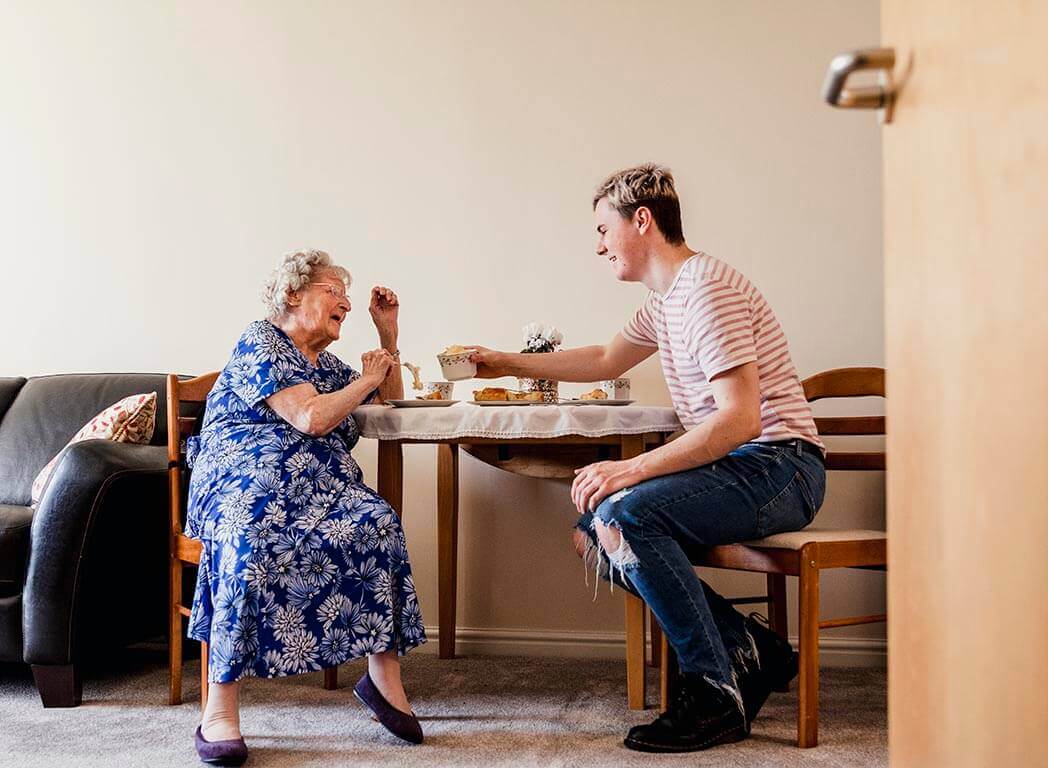
Social care mutuals deliver social care through co-operative or mutual structures. This means that members of the organisations, who can be the consumers, the carers, the community or any combination of these, are involved in decision-making and benefit from its activities, including through the reinvestment of trading surplus.
Co-operatives and mutuals operate in aged care and disability services, community health, First Nations services and social housing.
Co-operative and mutual structures can increase diversity and choice in health, community and social services with positive outcomes for accountability, innovation, quality and productivity.
Find out more
Read about our Care Together Program to start and grow more co-ops and mutuals in social care.
Browse our campaign Action to Empower: Social Care Mutuals and read our Action to Empower report.
What are care co-ops and mutuals?

Co-operatives and mutuals generate benefits through their autonomy and independence, decision-making by members, member economic participation, reinvestment of profits, and co-operation.
They can:
- Increase organisational diversity in social service markets: Co-ops and mutuals can assist smaller service providers to come together in a mutual to collaborate and operate more efficiently in a market.
- Harness the professionalism of carers and unleash their entrepreneurialism: Employee-owned organisations are an alternative to privatising or outsourcing services. Government can sponsor innovation like Kudos Services Australia’s first public service mutual.
- Increase consumer choice and control by helping individuals and communities to formulate their own responses to problems in client directed care markets: Co-operatives and mutuals develop empowerment through community owned co-operatives.
There is evidence that when carers and consumers are empowered through democratic governance productivity and workplace satisfaction increases dramatically.
Co-operatives and mutuals are enterprises that deliver consumer choice and control and efficient and innovative service delivery. Social care mutuals are well placed to support community resilience where services cannot be delivered due to market or other service provision failure.
Co-operatives and mutuals have advantages in delivering services in areas that are not well services because they are small scale, remote or complex. They have proven particularly useful when:
- Services are too expensive for government or market forces to provide
- There are low or variable profits
- Specialised service is needed
- User input is required in service design and delivery.
Social care mutuals can have different structures, depending on who their members are.
Consumer co-operatives
Consumer or community-owned co-operatives can be an ideal approach for disadvantaged groups where there is the energy, commitment and expertise in the community to tackle problems together.
Co-operatives can be a method of developing members’ capacity to participate in the broader community by providing enhanced networks, increased confidence and skills.
Consumer co-operatives have demonstrated success and have enormous further potential with some of Australia’s most disadvantaged groups including Indigenous groups, rural communities, people from culturally and linguistically diverse backgrounds, people with disabilities and older Australians in need of care.
Employee co-operatives
Worker-owned co-operatives provide employees with autonomy and the ability to make judgements as to how to provide the best service at the local level. They free staff to be entrepreneurial and to innovate.
Employee-governed businesses can be effective for those working with people with complex needs, where consistency of personnel is required, and where services are focused on empowerment-based approaches. Staff-based co-operatives can be particularly effective in areas where staff attraction and retention has proven problematic.
Enterprise co-operatives
Governments throughout Australia are seeking larger, more efficient service organisations with a single point of entry for a wide range of complex social problems. Many smaller, yet highly effective social support organisations may not survive competing against these larger organisations with their economies of scale. This can mean larger organisations replacing smaller local groups that have built relationships with their local community, have local knowledge and specialist experience.
Co-operatives of businesses and not-for-profit organisations, called enterprise co-operatives, can support smaller providers to share corporate functions including bulk purchasing, accounting, human resources, marketing, client software and OH&S services. Enterprise co-operatives assist specialist organisations to increase productivity and market power whilst retaining local input and local jobs.
The Social Care Community of Practice (CoP) is a series of online meetings and events designed to develop a network of people and enterprises interested in business model innovation involving new models of ownership that empower consumers and workers in social care.
Case studies

Kudos Services
Nundah Co-op

Supporting Independent Living Co-operative

The Co-operative Life
Social care news

Glen Innes Health Hub launches

Co-operatives: A new model for sustainable care in Sydney
Murrumbidgee Aged Care Network: ABC Riverina Radio

BCCM CEO talks housing and care on Sky Regional News

ABC interview: Co-operative Care Wagin is a community-driven model for regional health services

Happy birthday Nundah Co-op
BCCM welcomes Bill Shorten’s comments regarding the need for major systemic reforms to NDIS
The future of care is co-operative